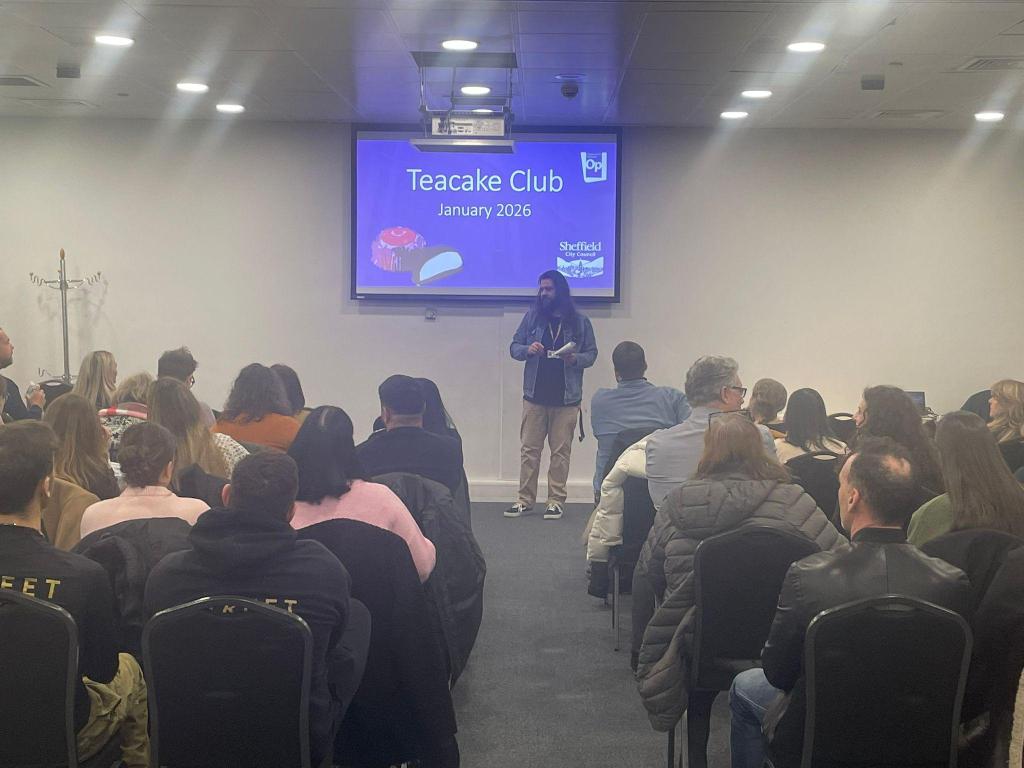
The Teacake Club gathered on Wednesday 28 January 2026 at the English Institute of Sport (EiS) Sheffield. Ross Brown from Opportunity Sheffield welcomed everybody to the first Teacake Club of 2026 and thanked the venue team.
Speakers
Street League
Graeme Severn – Operations Manager
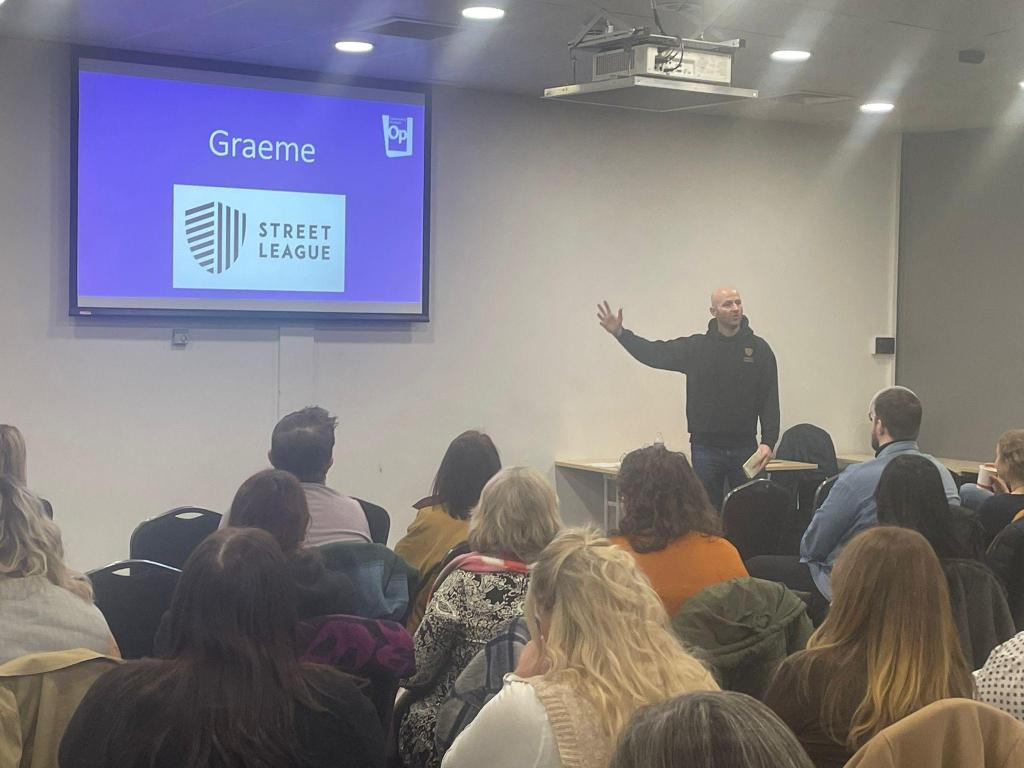
See the Street League slideshow here:
Graeme explained that Street League is a national youth employability charity that covers 11 areas nationwide. They had a record-breaking year last year against targets like unemployed young people in programmes and the number of female participants.
Graeme highlighted the importance of working in partnership to their work. They secured 166 local jobs last year. Graeme introduced one of their academy graduates, Brandon, to speak. Before Street League, he wasn’t engaging in education and left school in Y7. Not going to school and interacting with people impacted his mental health.
He found out about Street League through his social worker. They helped develop his confidence, skills, and how to use Skills Builder. He got a Level 1 in English and Maths and other qualifications through Street League from attending back to back academies. He then went onto an NHS programme with a guaranteed interview and got a job working as a patient services assistant.
Brandon had lots of support with interview skills and preparation so he was in the best place to get the job. He is still working in that job a year on. The Street League progression model was included in the slides, outlining what they do with participants – sports to engage together with education and training, soft skill development, and progression into work.
To find out more visit the Street League website.
Everyone Active
Simon Coates – General Manager at English Institute of Sport Sheffield
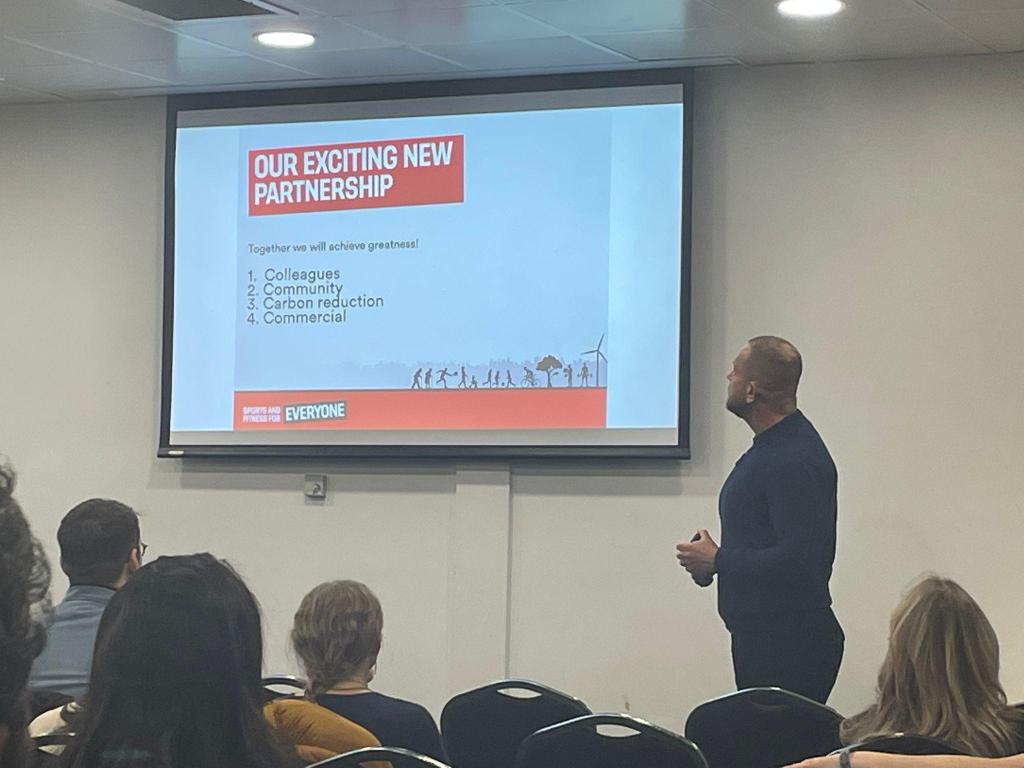
See the Everyone Active slideshow here:
Simon Coates talked about the origins of SIV, a leisure operator now known as Everyone Active, based at English Institute of Sport. Everyone Active now has 240 sites nationally and employ over 15,000 colleagues. 900 of which, are based in Sheffield.
Their values are: improve people’s lives, everyone matters, and play to win. He talked about how the facilities feed into the Community Health and Wellbeing Framework. He emphasised the importance of working with the community and outlined some outputs like community outreach, social value, care experience memberships and inclusive activities.
To find out more, visit the Everyone Active website.
Sheffield Family Hubs
Donna McCole – Family and Community Support Worker
Charlotte Danks – Casual Emergency Duty Team Support Worker
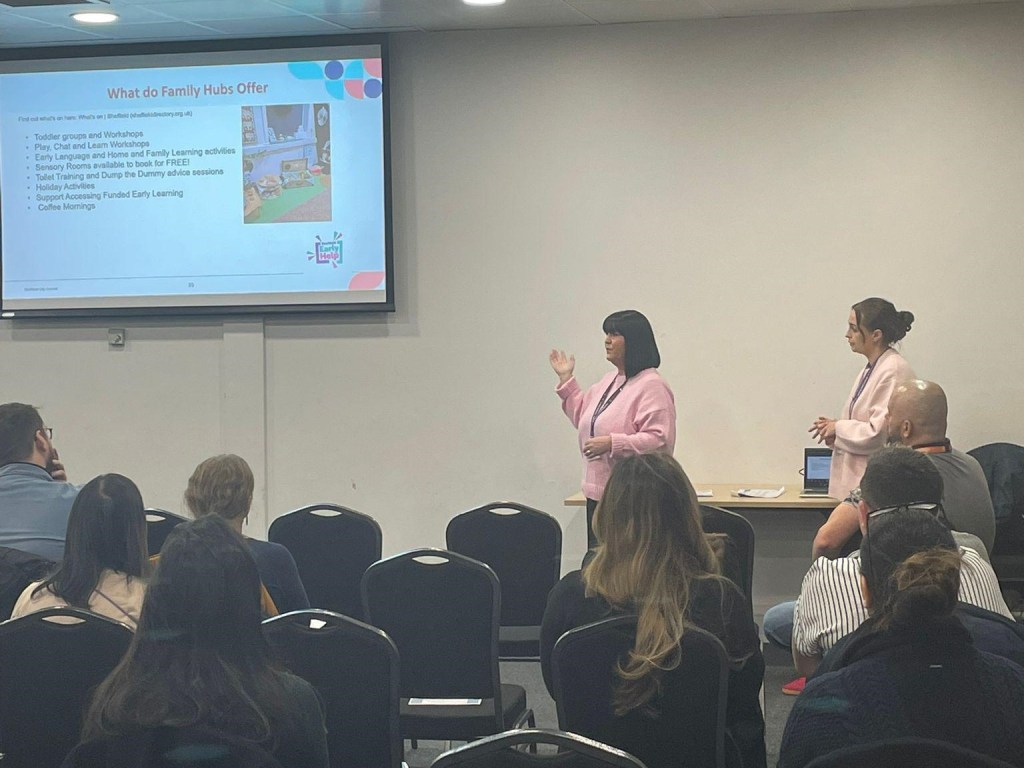
See the Family Hubs slideshow here:
Families with children aged 0-5 can access the Family Hubs. It’s a one-stop shop where families can access any support they need.
Donna and Charlotte’s roles are out in the community. They help build on family strengths, through their Family Hubs, plus five other linked sites. Families don’t have to live within the hub locality – they can attend any one.
They went through the variety of things on offer, such as infant feeding advice, doulas, baby massage, baby and toddler groups, weaning advice, and 1:1 prevention work.
Regular Shelter and DWP drop-ins are also available to attend. There are several ways to volunteer – community connectors (getting to know the public and people in the area and connecting to other services), empowering parents empowering communities, doula work, and infant feeding peer support.
Female only opportunities available. Many of the volunteers progress onto work doing roles like prevention work. They also offer a partnership programme, that organisations can engage with.
To find out more on the Sheffield Directory website.
Opportunity Sheffield
Peter Slack – Strategic Support Coordinator
Joao Bento Galinha – Supported Employment Job Coach
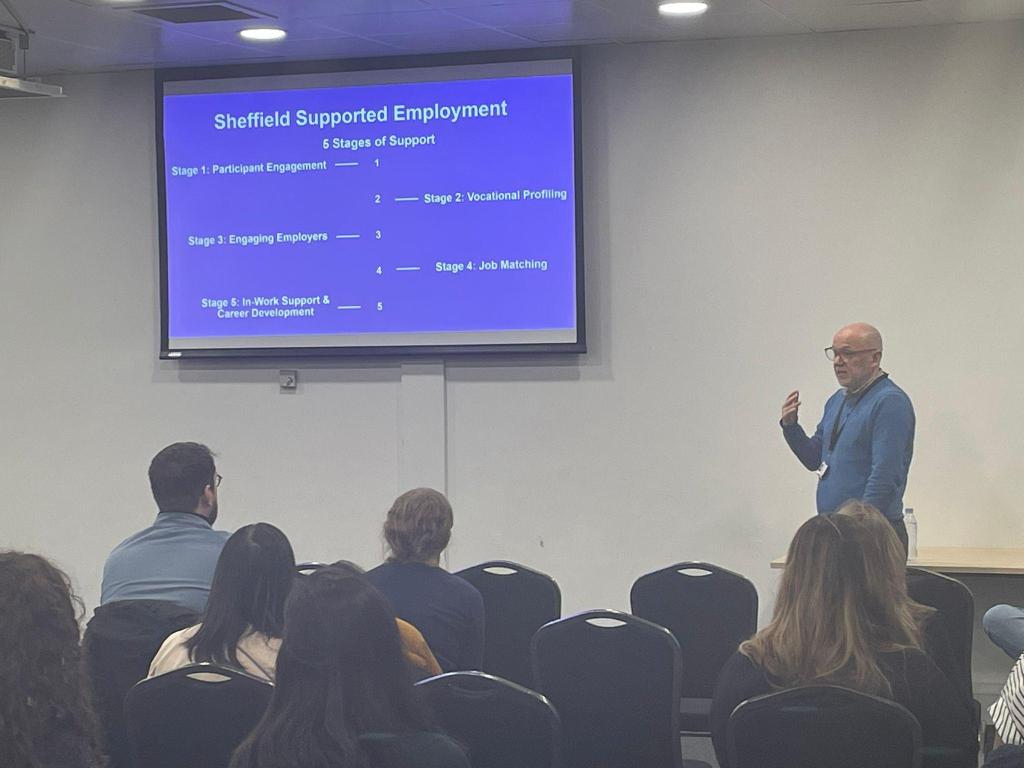
See the Supported Employment slideshow here:
Peter spoke about the Sheffield Supported Employment programme, which has been going at Opportunity Sheffield since 2022. Supported Employment is key for some individuals to offer intensive support in navigating the obstacles associated with applying for work.
The programme gives Autistic people or people with learning difficulties or a neurodiversity the support to secure paid, meaningful work and thrive in the workplace. Their job coaches aim to give their participants real wages and support every step of the way.
Every participant has a dedicated job coach who helps them explore their strengths and also offers support once they are in work. They also work with employers to offer training and guidance to so that they can confidently support individuals coming through supported employment programmes.
This programme changes lives for individuals, but also for their families, for community and for employers to diversify their workforce. They have had excellent feedback from employers about the dedication these employees show.
There us now four months left on the current Supported Employment programme. There are 138 people on this programme and 41 have secured employment. Employer examples include Everyone Active, TK Maxx and McDonalds. This isn’t just about securing jobs, but about making sure the people on programme have equity and a level playing field, and helping employers to see talent, where others may only see barriers.
Because of the great work done on the Sheffield Supported Employment, Opportunity Sheffield have secured a five-year contract for Connect to Work funding, under the Supported Employment model. There are now 10 job coaches in Opportunity Sheffield at Sheffield City Council, as well as a few smaller external contracts.
There are five stages to this model: participant engagement, vocational profiling, engaging employers, job matching, and in-work support and career development.
Joao gave an example of one of his case studies. He talked about the support he has given to his participants, and the importance of a mix of structure and flexibility. He talked about the importance of building trust to be able to help them to succeed.
One participant in particular, lacked a lot of confidence and used to go out with his grandma or mother but never alone. He had even tried different support services before. He was very nervous for first appointment, but after a few appointments, Joao started to get to know him better and managed to secure a voluntary placement for him.
Joao supported him while he was at the placement and helped him break down everything he needed to do there. This helped him to settle in, learn new skills and make friends. He even started going to the supermarket by himself, which was a huge step forward.,
To find out more, visit the Pathways to Work website.
VAS
Tammy Grundman – Volunteer Development Manager
Michael Scarborough – Volunteer to Career Partnership Officer
See the full VAS slideshow here:
Tammy talked about how Voluntary Action Sheffield (VAS) have a vision to support people and communities to reach their potential. One of the key ways they do that is creating volunteering opportunities for disadvantaged groups. One way they do that is through inclusive volunteering.
Many want to volunteer to develop skills and only 7% volunteers fall into that group. The inclusive volunteering model flips the idea of an ‘ideal’ volunteer on it’s head, and identifies people who want to use volunteering to progress through and then find work.
VAS currently use this model for admin roles. They recruit multiple volunteers and break down admin tasks into different sections. They take large groups of volunteers and assign tasks once a week or half a day a week. They support volunteers to develop those skills based on where they want to volunteer and also where the tasks can progress in complexity, so tasks begin to get more complicated (e.g. pivot tables, minuting meetings).
As tasks get more advanced, the number of volunteers gets smaller and those people come in more regularly in preparation for entering the workplace. This gives them the opportunity to actually experience what an admin role entails so they are properly prepared for job interviews.
The reason this works is they have a mentor. Mentors are also volunteers, but tend to be people who are more stable and steady, maybe professionals who work part time or retirees. They support and teach throughout the model.
This reduces the impact on staff time. As volunteers start to progress, they can go into mentor roles too. These structures exist elsewhere in paid employment, but not usually in volunteering. They have received funding from Sheffield City Council to launch Volunteer to Career to work specifically with volunteers in mentoring capacity and enable them to expand the model.
VAS are working with external partners to roll this out. The goal of volunteering in this way is to progress into job coach roles, however any role is a success.
To find out more, visit the VAS website.
Hive IT
Ellie Mosley – Delivery Manager
See the Hive IT slideshow here:
Hive IT are a web development agency. Today Ellie and the team are representing both Hive and Learn for Life who have partnered on the project, New to Sheffield.
This project came about to help with the ‘asylum journey’. The existing website was very content heavy and out of date, so City of Sanctuary handed it over to Learn for Life who approached Hive about redeveloping it.
Hive have done a lot of work to understand what the problem is and work out the solution, which lead them to want to open it out to anyone who was new to the city, aside from just asylum seekers.
The aim is to support asylum seekers, migrants, refugees, international students, visa holders, and people with weak/no social ties. They prioritise those with more difficult journeys, but want to grow it into something that helps anybody new to the area.
They did a lot of work with Learn for Life students to understand the things they found difficult when they first came to the country/city. It includes info on things like healthcare, basic needs, staying safe, seeking sanctuary, transport, accommodation, community and networkers etc. The launch event is in a few weeks at Learn for Life.
For more information about web development, visit the Hive IT website.
To find out more, visit the Learn for Life website.
Offploy
Gary W – Senior Social Employment Advisor
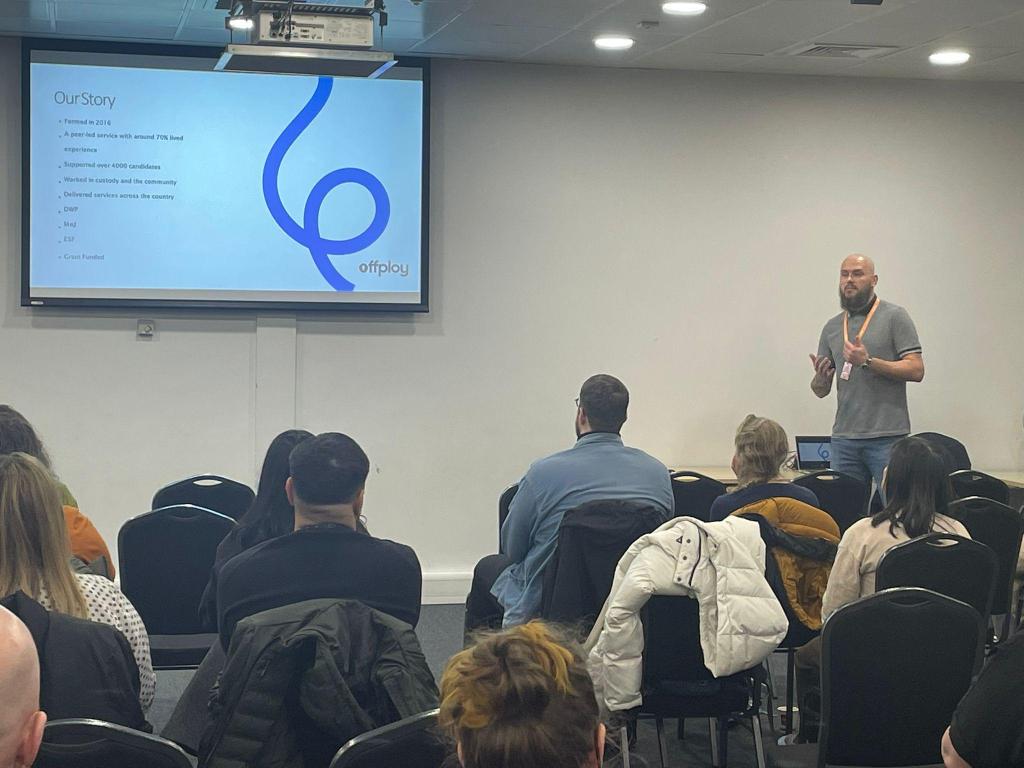
See the Offploy slideshow here:
Offploy support people to make informed choices about work, working specifically with those who have criminal convictions. There are seven pathways to re-offending which Offploy look at to help support people to avoid reoffence.
Gary went through the benefits of employing ex-offenders, which ties in with the pathways of preventing reoffending. One in four people have a conviction of some type, 50% of offences are driving offences. 1 in 10 people with sentences actually go to prison.
Ex-offenders don’t ‘look’ any way in particular. He then talked about the personal barriers that ex-offenders face, such as getting up for work on time, personal hygiene and dressing appropriately.
He outlined the disclosure process when applying for work. Unspent convictions are the ones that are trickiest as candidates legally have to disclosure them. Once a conviction is spent, the client doesn’t have to declare them and they won’t show up on a DBS check, as they aren’t active.
This is confidential information, so the only people in that business who need to know is the interviewer and HR.
To find out more, visit the Offploy website.
IEP
Riza Aparici – MAIEP Partnership Manager
Shelley Nelson – FIEP Learning and Quality Manager
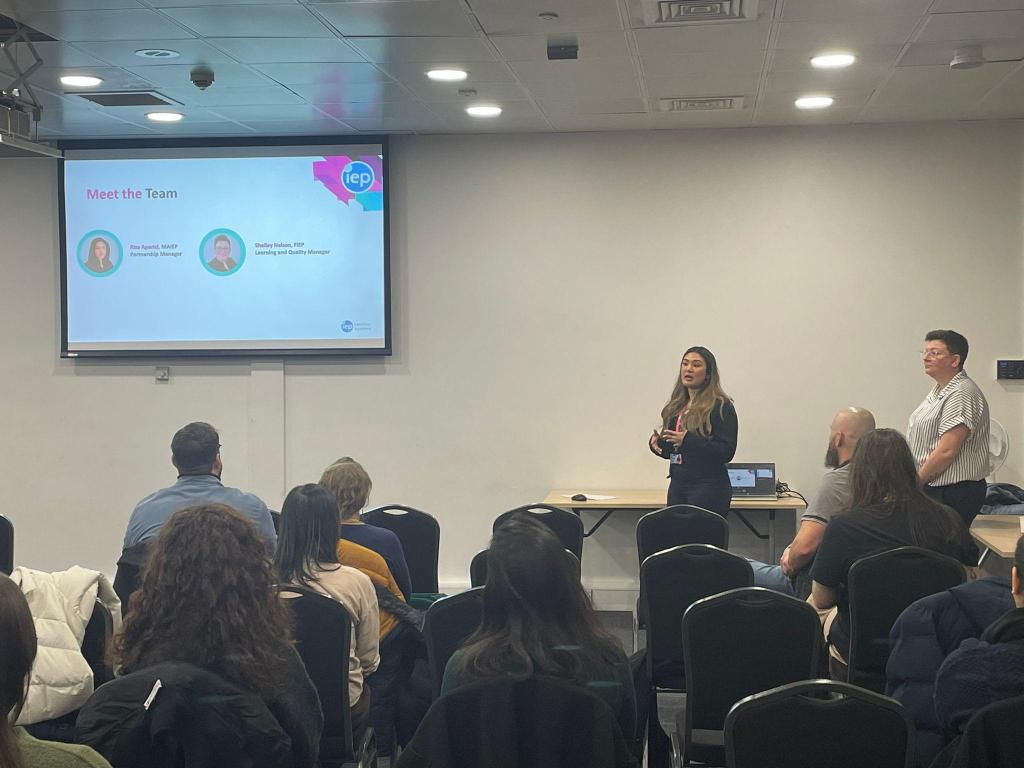
See the IEP slideshow here:
Institute of Employability Professionals (IEP) support individuals working with participants to move them into employment, education or training outcomes.
Riza talked about the qualifications and accredited learning that they offer, as well as talks, podcasts and workshops. They can also support with training internally so that organisations can deliver training themselves.
Shelley talked about the elearning and workshops on offer for anyone in the employability sector. As a member, you automatically get access to learning content, such a mental health in employability and supporting over 50s in employability. They also offer 90-minute workshops each month.
They are a membership organisation, so listen to members, address what they want and need, then build support tools that members want.
To find out more visit the IEP website.
Grow
Charley Crump – Training Manager
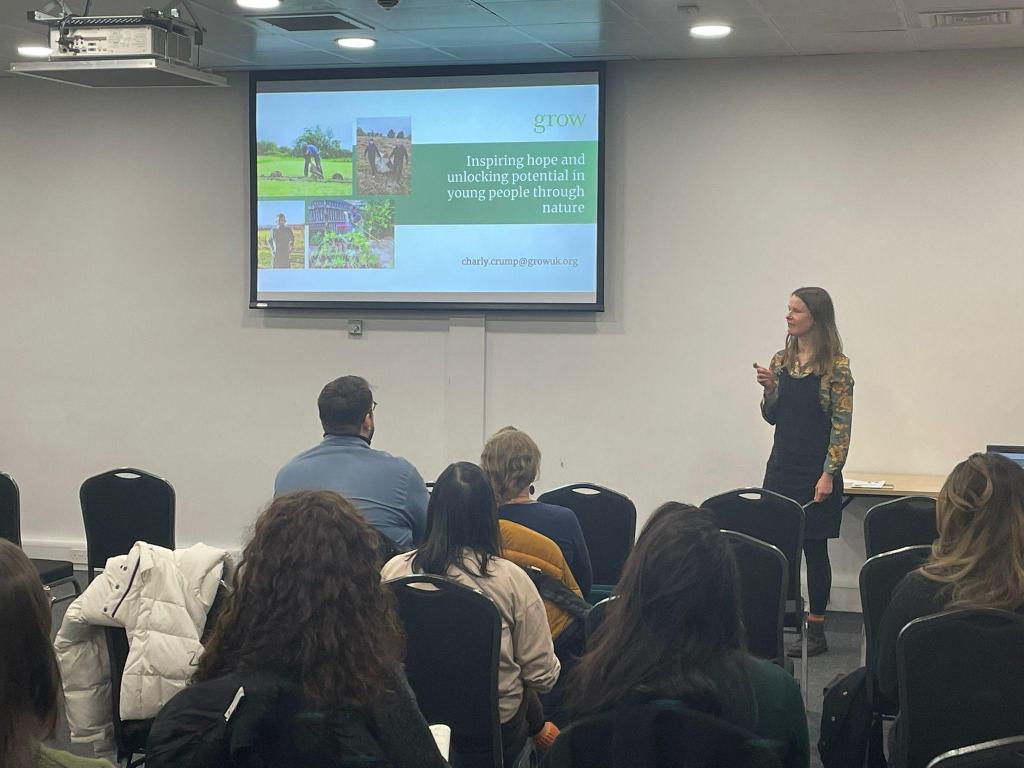
See the full Grow slideshow here:
Grow supports 16-24 year old NEETS. They work in employment, wellbeing and social connection for a holistic approach. This helps young people overcome two critical barriers – no job/work experience and not quite ready for work.
Grow Training is an introductory programme for young people, which runs for four weeks, three afternoons a week. It’s all done outdoors. They get a guaranteed interview at week four to work for Grow for 10 weeks.
Another programme is being delivered as a pilot at High Green Development Trust. The dates of delivery for 2026 are to be confirmed. This involves paid work experience for 10 hours per week, a group workshop, and a one-hour coaching session.
Participants go out to one of Grow’s partners for a full day, and at the end of programme, Grow supports them to continue working with the partner.
To find out more, visit the Grow website.
In Brief
Attendees had a chance to briefly promote services they work for and/or projects they are working on.
John Powell from Opportunity Sheffield – Talked about his mapping exercise, which aims to gather information about all employment and skills provision in the city, so that they can make this triage system work as effectively as possible.
He encourages all Teacake Club members to enter all their employment and skills services by scanning the QR code in the latest email newsletter or by visiting the Mapping Employment and Skills Activity website.
The meeting was concluded and Ross thanked everyone for their attendance.
If you would like to offer a venue or present at a future Teacake Club meeting, please email Ross Brown: ross.brown@sheffield.gov.uk
 teacakeclub.org